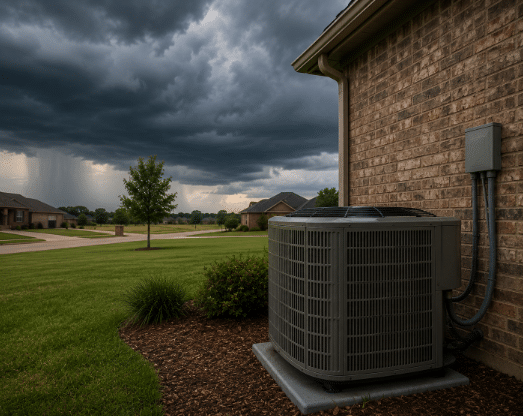
When severe weather arrives in Oklahoma, many homeowners focus on storm shelters, emergency kits, and weather alerts. Yet one part of the home is often overlooked before, during, and after severe storms: the HVAC system.
For decades, a common tornado myth has circulated throughout Oklahoma communities. Many people were told to crack open their windows during a tornado to “equalize the pressure” inside the home. Modern meteorologists and structural experts have repeatedly debunked this advice, but the conversation raises an interesting question: what does extreme weather actually do to your heating and cooling system?
The answer may surprise you. While your HVAC equipment is built to withstand the elements, Oklahoma’s unique combination of rapid pressure changes, straight-line winds, lightning strikes, and airborne debris can create hidden problems that affect performance long after the storm has passed.
The Truth About Pressure Changes and Your HVAC System
During severe thunderstorms and tornadic activity, atmospheric pressure can drop rapidly. While these pressure changes are often noticeable outdoors, modern homes are designed to withstand them without opening windows.
According to the National Weather Service’s tornado safety guidance, opening windows during a tornado does not protect your home and can actually increase risk by allowing damaging winds and debris inside.
From an HVAC perspective, tightly sealed homes often perform better during severe weather events. Properly sealed ductwork, dampers, and ventilation systems help maintain controlled airflow while reducing unnecessary stress on the home’s building envelope.
In fact, opening windows during a severe storm can disrupt airflow patterns throughout the home and force your HVAC system to work harder once conditions stabilize.
The Post-Storm Micro-Debris Trap
Once the sirens stop and the skies clear, most homeowners inspect their roofs, gutters, and vehicles for damage. Unfortunately, the outdoor air conditioning unit is frequently ignored.
This is where Oklahoma’s severe weather creates a unique challenge.
Straight-line winds exceeding 70 mph can drive red dirt, grass clippings, leaves, pollen, twigs, and other debris directly into your outdoor condenser coils. The buildup may not be immediately visible, but it can act like a blanket around the system.
According to the U.S. Department of Energy, restricted airflow through condenser coils reduces efficiency and forces air conditioning systems to consume more energy while delivering less cooling.
As temperatures climb into Oklahoma’s summer heat, this hidden debris can contribute to:
- Reduced cooling performance
- Higher utility bills
- Increased system wear
- Premature component failure
- Shortened equipment lifespan
A professional HVAC inspection following major storms can help identify and remove debris before it causes costly problems.
The Lightning Surge Reality
One of the biggest misconceptions homeowners have is that their HVAC system is protected if the thermostat is switched off during a storm.
Unfortunately, that’s not how electrical surges work.
A nearby lightning strike does not need to directly hit your home to cause damage. Electrical energy can travel through utility lines and enter your home’s electrical system, potentially damaging sensitive HVAC electronics.
Modern systems rely heavily on circuit boards, sensors, and communication modules. Even when a thermostat is set to “Off,” these components may remain vulnerable to incoming power surges.
The Electrical Safety Foundation International notes that lightning-related surges can damage electronic equipment throughout a home, including major appliances and HVAC systems.
Installing a dedicated HVAC surge protector is often one of the most affordable ways to help protect expensive equipment from unexpected storm-related electrical events.
A Simple Post-Storm HVAC Checklist
After severe weather passes and conditions are safe, homeowners can perform a quick visual inspection of their outdoor unit.
1. Check for a Shifted or Tilted Pad
Heavy rain and saturated Oklahoma soil can cause equipment pads to settle or shift. A condenser that is no longer level may experience drainage and operational issues.
2. Look for Fan Obstructions
Inspect the top and sides of the unit for branches, leaves, hail debris, or other materials that may interfere with fan operation.
3. Inspect Electrical Connections
Look for visible damage to electrical conduits, disconnect boxes, or exposed wiring near the unit. If anything appears damaged, contact a professional before operating the system.
Protect Your HVAC System Before the Next Storm
Oklahoma’s severe weather is unavoidable, but costly HVAC damage doesn’t have to be. Routine maintenance, prompt inspections, professional AC repair, and proactive surge protection can help keep your system operating efficiently throughout storm season and beyond.
Whether you need expert HVAC services, emergency AC repair, or a complete AC installation, the team at Air Comfort Inc. is ready to help protect your comfort and your investment.
Schedule your appointment today or call 918-299-9401 to speak with our team about HVAC maintenance, repairs, inspections, and storm-season preparedness.