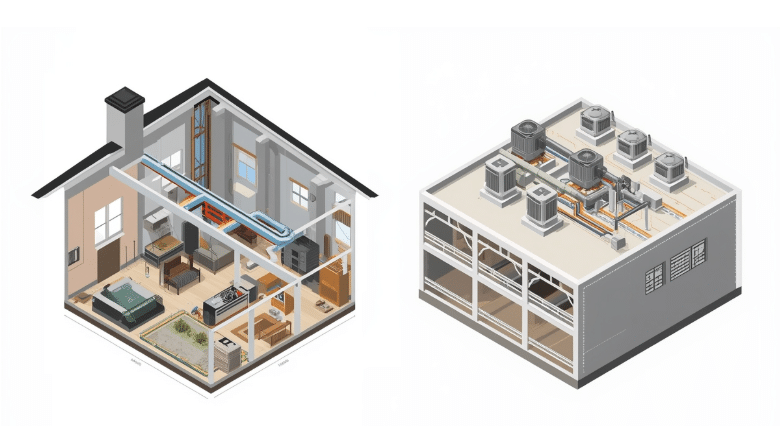
Heating and cooling systems may look similar from the outside, but the needs of a home are very different from those of a business. Understanding how residential and commercial HVAC systems compare can help you make smarter decisions, whether you are upgrading equipment, planning a new build or trying to improve energy efficiency. Air Comfort Inc works with both types of systems, so we see firsthand how design, performance and maintenance requirements change depending on the space.
Below is a clear look at how these systems differ and why that matters for comfort, safety and long-term value.
System Size and Capacity
One of the biggest differences between the two systems is the amount of heating and cooling they must deliver. Homes are smaller, have fewer rooms and serve fewer people on a daily basis. Commercial buildings come in many shapes and sizes, from small offices to large warehouses, and each one has more demanding temperature needs.
Residential systems are designed to match the square footage of a home. They often use a single split system with an outdoor condenser and an indoor air handler. These units run at a capacity that fits everyday living without wasting energy.
Commercial systems must manage much larger spaces with higher occupancy. They often require stronger compressors, larger duct networks and more airflow. Many businesses need zoned climate control so that different areas can maintain different temperatures. This adds complexity, but it is essential for comfort and productivity.
System Design and Structure
Residential HVAC systems follow a fairly standard layout. They usually serve one family and do not require specialized zoning or large-scale ventilation. Commercial systems depend heavily on the building’s purpose, which means the design becomes much more customized.
Commercial systems often use modular units called rooftop packaged systems. These units sit on the roof to save indoor space and allow easier access for technicians. They can also be expanded as a business grows, which makes them practical for commercial properties.
Homes rarely need this type of modular design. A simple, well-sized system is usually enough to meet comfort expectations. Many homeowners today also look for energy-efficient upgrades such as geothermal HVAC services, which offer long-term savings and better performance.
Ventilation and Airflow Requirements
Good airflow is important in every indoor environment, but the level of ventilation varies widely. Homes need enough fresh air to maintain indoor air quality, prevent moisture problems and keep the living space healthy.
Commercial buildings require stronger ventilation because more people share the same space. These buildings also generate more heat and pollutants from equipment, lighting and daily operations. Restaurants, gyms and medical facilities have even higher air quality needs, which means more advanced filtration systems and stronger ventilation controls.
For many businesses, the HVAC system has to support health and safety standards. This often involves specialized filters, air exchangers or humidity controls.
Energy Efficiency and Cost
Energy usage is another major difference. Residential systems run daily but generally use moderate amounts of electricity. Homeowners tend to focus on quiet operation, balanced temperatures and long-term savings.
Commercial systems use more energy due to their size and complexity. A large rooftop unit may run for long hours to maintain stable temperatures. Businesses often face higher costs because of heavy equipment and wider building layouts.
Modern commercial systems use energy management tools that help regulate usage and avoid waste. These tools allow building owners to set schedules and monitor performance in real time. Homeowners typically rely on smart thermostats for similar benefits on a smaller scale.
Installation Challenges
Installing a residential HVAC system is usually a straightforward project. A technician places the outdoor unit in an accessible location, sets up the indoor unit and ensures proper airflow. The process is predictable and does not require major structural changes.
Commercial installation is more complex. Rooftop systems require cranes. Zoning systems must be matched to the building layout. Ductwork may span multiple floors. All of this adds planning time, engineering work and safety considerations.
If you are planning upgrades for your home, working with a provider that offers hvac installation Jenks ensures a smoother process and reliable results.
Maintenance Expectations
Every HVAC system needs consistent care to perform well. Residential systems benefit from seasonal tune ups, filter changes and routine inspections.
Commercial systems need more frequent checks because they operate for longer hours and support larger loads. Filters need to be changed more often. Belt systems, motors and electrical components require regular testing. A neglected commercial system can fail quickly, leading to costly downtime.
Homeowners can often manage simple maintenance between visits, such as replacing filters and clearing debris from around the outdoor unit. Commercial systems usually require professional service plans because of their advanced components and safety requirements.
Repair Differences
Repairs for residential systems are usually simpler and less expensive. Technicians can often diagnose issues quickly, and replacement parts are easy to source.
Commercial repairs can be more involved. The components are larger, and systems are often spread across rooftops or multiple floors. Businesses rely on quick, accurate repairs to avoid shutting down operations. Working with a skilled team helps ensure that issues are resolved correctly the first time.
If you are a homeowner, choosing a trusted provider for ac repair Jenks OK helps keep your system running dependably year round.
Noise and Comfort Levels
Residential systems must balance efficient performance with quiet operation. Homeowners expect their units to run smoothly without disrupting daily life.
Commercial systems prioritize function over noise. Rooftop placement helps reduce sound inside the building, but these units still operate at louder levels. Because they are farther away from everyday activity, noise is less of a concern than performance.
Regulatory and Safety Requirements
Homes have basic safety requirements, such as proper installation, grounded wiring and secure ventilation. Commercial systems follow stricter codes because businesses must protect employees and customers.
Commercial HVAC systems may need:
• Specialized ventilation for manufacturing or food preparation
• Fire safety integration
• Regular inspections for compliance
• Systems that support health requirements in clinics and medical offices
This leads to more detailed planning and documentation during installation and maintenance.
Why the Differences Matter
Understanding how these systems differ helps you make the right decisions for your property. Homeowners benefit from choosing equipment that fits their house while avoiding unnecessary features that raise costs. Business owners need dependable climate control that supports comfort, safety and efficiency on a larger scale.
A well-planned HVAC system helps:
• Improve indoor air quality
• Keep heating and cooling costs under control
• Extend the lifespan of equipment
• Maintain comfort in every part of the building
• Reduce repairs through consistent care
Whether you are maintaining a home or managing a commercial space, working with a trusted provider like Air Comfort Inc Jenks OK ensures your system is sized correctly, installed properly and supported by knowledgeable technicians.
A dependable HVAC system is an investment that provides comfort, safety and long-term efficiency. If you are planning a replacement, looking for maintenance support or dealing with persistent comfort issues, the right guidance can make a big difference.
Air Comfort Inc is here to help you choose the best solution for your home or business. Visit https://aircomfortok.com/ to schedule service or request expert assistance.